
Screenshot


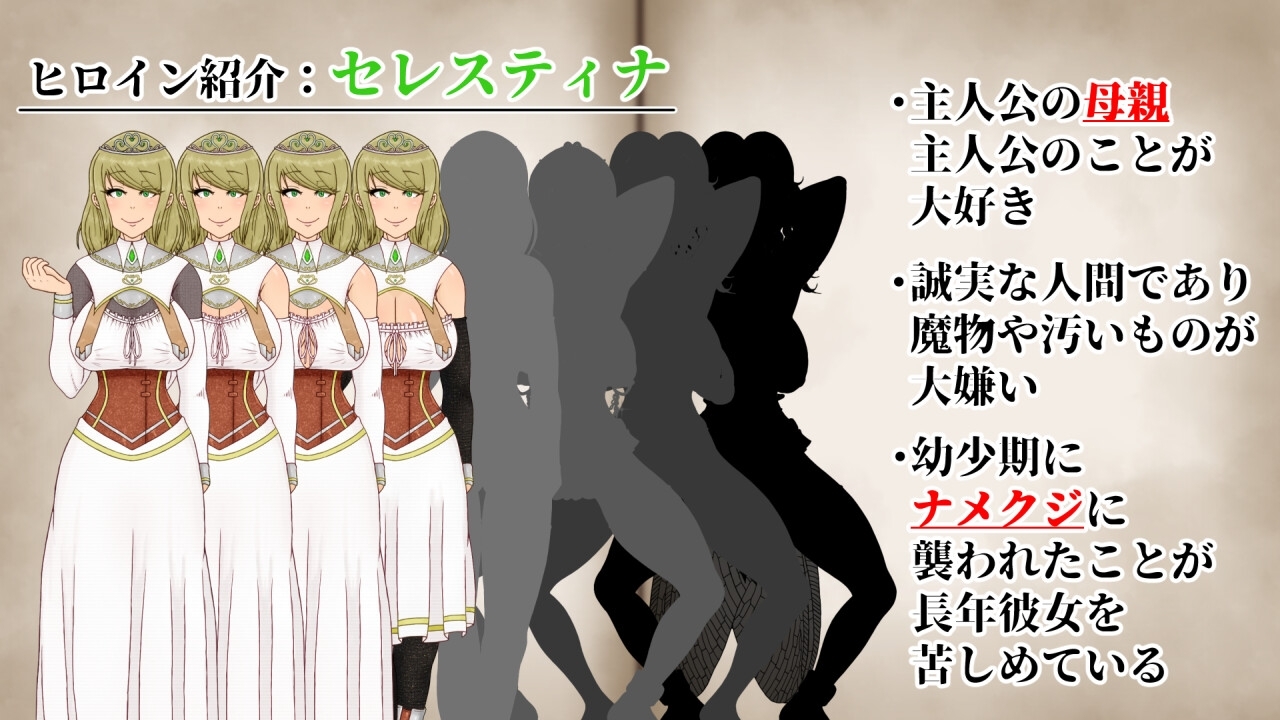
Introduction
An insect-borne curse creeps into a quiet frontier town, and the two women the protagonist loves most — his mother and his childhood friend — begin to change in ways no one else seems to find strange anymore. Built on pure narrative progression with zero grind, no combat encounters, and no stat-leveling treadmill to hide behind, the game forces you to sit with every moment as the people closest to you slowly slip away into something unrecognizable. The built-in first-person (protagonist POV) mode locks you into the hero's perspective — meaning you don't just watch the corruption happen from above. You live inside the uncomfortable silences, the subtle shifts in tone, the way a smile doesn't quite reach the eyes anymore, until the transformation is complete and you realize you stopped noticing it somewhere along the way.
2. The heterogeneity of the town isn't just worldbuilding decoration. New faces arrive claiming to help with the "pest problem," and the social fabric starts rearranging itself around them. Doors that used to stay open now close. Conversations trail off when the protagonist walks in. The insects in the narrative operate less like a conventional monster threat and more like a creeping cultural infection — one that rewires attachment, desire, and loyalty at the root level while everyone insists nothing is wrong.
3. Because there's no combat loop to distract you, the environment itself carries the tension. You explore by talking, observing, and returning to the same spaces at different story beats to see what's shifted — a folded blanket that wasn't there before, a scent someone comments on, a change in how your mother or childhood friend responds to touch or eye contact. The game is engineered so that you become the unreliable narrator simply by virtue of loving the people you're trying to protect.
2. The insect possession element is handled as psychological horror disguised as intimacy. Bodies aren't just invaded — they're convinced. You'll encounter scenes where the line between "she's still herself" and "something else is wearing her skin" blurs so naturally that the game dares you to call it out and gives you no one to validate your suspicion. The parasite works through social integration as much as biology, which means the town's gradual normalization of strange behavior becomes a weapon turned against the protagonist.
3. This is where the protagonist perspective option earns its place. Switching to first-person doesn't add new scenes so much as it strips away the safety rail of overhead detachment. You process every interaction at the same height as the character's eyeline — every awkward pause, every moment she looks through you instead of at you, every time the word "son" or your name lands with a half-second delay that wasn't there last week. It turns a corruption narrative into a sustained exercise in helpless witnessing.
2. Progression is entirely event-driven and dialogue-gated, unfolding through daily cycles, location revisits, and relationship flags that track below the surface. The pacing rewards players who actually read — who click on the same bookshelf twice, who talk to the neighbor nobody talks to, who notice that the village elder stopped meeting your eyes three days before the mother subplot kicked into gear. It plays more like an interactive novel with a map than a game with stats, which is exactly the headspace it needs you in.
3. For the target audience, this structure is the selling point. The lack of mechanical friction keeps the immersion airtight. You're not managing equipment while your mother changes into something hollow — you're standing in the room with her. And because the game refuses to give you a battle system to redirect your anxiety into, that anxiety has nowhere to go but straight into the narrative. It's a mean trick. It's also why the title sticks in people's heads long after the session ends.
A Town That Doesn't Look Sick — Until You Pay Attention
1. The setting starts deceptively gentle: a weathered stone-and-timber settlement on the edge of contested territory, where trade routes bring in more than just goods. What begins as background flavor — a few nervous locals, a priest complaining about "unclean" offerings, an old well no one drinks from anymore — gradually reveals itself as the early stages of a parasitic infestation with insectoid roots. The writing doesn't sprint. It lingers in the mundane: shared meals, morning errands, the sound of boots on wooden stairs. That normalcy is exactly what makes the drift feel dangerous.2. The heterogeneity of the town isn't just worldbuilding decoration. New faces arrive claiming to help with the "pest problem," and the social fabric starts rearranging itself around them. Doors that used to stay open now close. Conversations trail off when the protagonist walks in. The insects in the narrative operate less like a conventional monster threat and more like a creeping cultural infection — one that rewires attachment, desire, and loyalty at the root level while everyone insists nothing is wrong.
3. Because there's no combat loop to distract you, the environment itself carries the tension. You explore by talking, observing, and returning to the same spaces at different story beats to see what's shifted — a folded blanket that wasn't there before, a scent someone comments on, a change in how your mother or childhood friend responds to touch or eye contact. The game is engineered so that you become the unreliable narrator simply by virtue of loving the people you're trying to protect.
The Corruption Arc — Mother & Childhood Friend
1. The emotional core rests on two parallel descent tracks. The protagonist's mother — the household anchor, stern but deeply affectionate — begins exhibiting small behavioral fractures first: uncharacteristic lethargy, unexplained absences at night, a growing fascination with dark corners and damp places. The childhood friend, all shared history and sunlit promise, drifts along a different vector — her changes wrapped in a disarming warmth that makes her more affectionate to everyone except the person who actually knew her first. The genius of the writing is how neither arc feels sudden. Every step forward is padded by three steps of plausible deniability.2. The insect possession element is handled as psychological horror disguised as intimacy. Bodies aren't just invaded — they're convinced. You'll encounter scenes where the line between "she's still herself" and "something else is wearing her skin" blurs so naturally that the game dares you to call it out and gives you no one to validate your suspicion. The parasite works through social integration as much as biology, which means the town's gradual normalization of strange behavior becomes a weapon turned against the protagonist.
3. This is where the protagonist perspective option earns its place. Switching to first-person doesn't add new scenes so much as it strips away the safety rail of overhead detachment. You process every interaction at the same height as the character's eyeline — every awkward pause, every moment she looks through you instead of at you, every time the word "son" or your name lands with a half-second delay that wasn't there last week. It turns a corruption narrative into a sustained exercise in helpless witnessing.
Pure Narrative Focus — No Battles, No Levels, No Grind
1. A deliberate design choice sets NTRRPG2 apart from the typical RPG Maker adult title: the combat system is intentionally absent. There is no party menu to bury yourself in, no random encounters to zone out on, no XP curve to measure progress by. Your only resource is time, and the game spends it whether you're ready or not. That removal of traditional gameplay loops isn't laziness — it's thematic precision. You can't grind your way out of an emotional collapse. You can't farm levels to make the betrayal stop hurting.2. Progression is entirely event-driven and dialogue-gated, unfolding through daily cycles, location revisits, and relationship flags that track below the surface. The pacing rewards players who actually read — who click on the same bookshelf twice, who talk to the neighbor nobody talks to, who notice that the village elder stopped meeting your eyes three days before the mother subplot kicked into gear. It plays more like an interactive novel with a map than a game with stats, which is exactly the headspace it needs you in.
3. For the target audience, this structure is the selling point. The lack of mechanical friction keeps the immersion airtight. You're not managing equipment while your mother changes into something hollow — you're standing in the room with her. And because the game refuses to give you a battle system to redirect your anxiety into, that anxiety has nowhere to go but straight into the narrative. It's a mean trick. It's also why the title sticks in people's heads long after the session ends.
New Download





RELATED GAMES


Syahata's Bad Day Game Download Free latest version
1.0.5

The Cradle Of Nurtured Eggs game download free
0.1.35a

The Secret Atelier game free download
2.3 Steam

Super Naughty Maid Game Download Free
Final

Super Naughty Maid 2 Game Download Free latest version
1.2

Kobeni Sloppy Blowjob Devil game download latest version
1.4 Paid

A Night With Mitsuki Bakugou latest version download free
1.0

Trick or (Sex)Treat : Halloween Special Game Download Free latest version
1.0

Velvet Ledger Game Download Free latest version
0.1