

Screenshot


Introduction
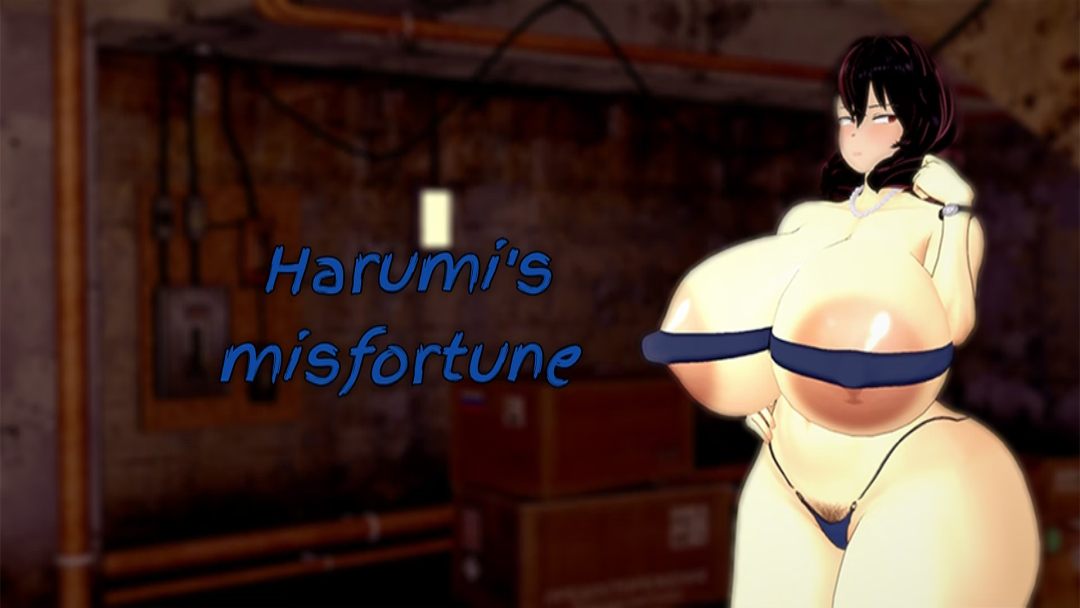
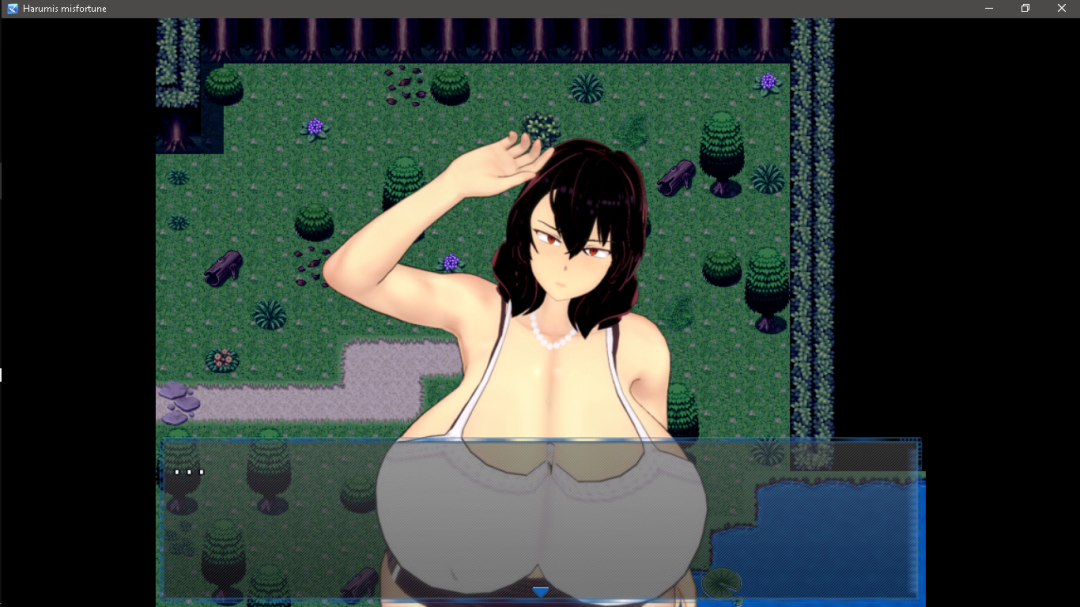
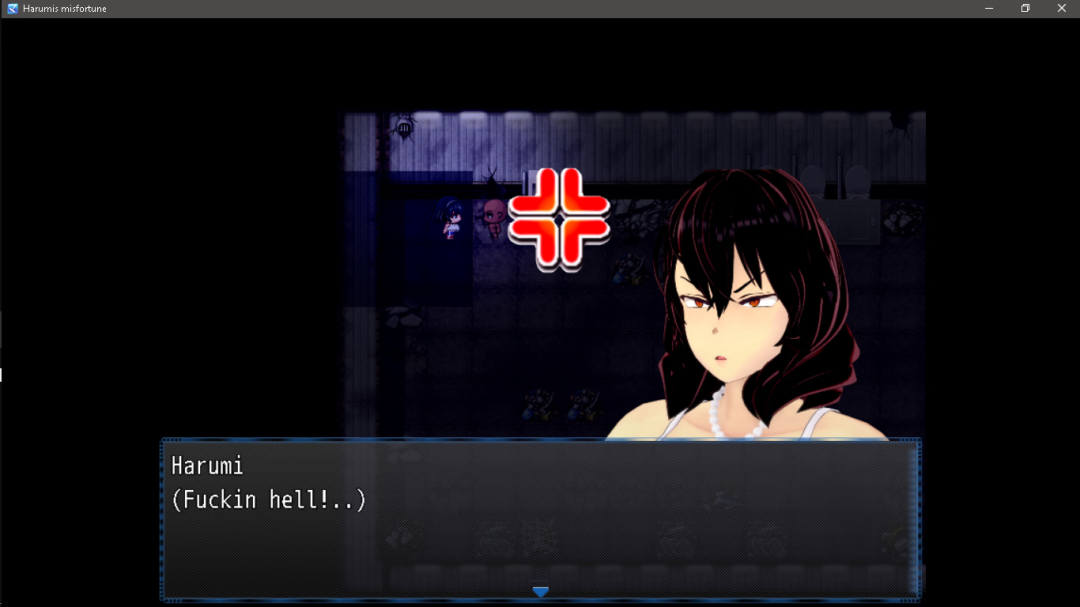
Harumi's Misfortune strands a well-endowed office worker on a bizarre island after a late-night drinking session. The game leans into its own missing lore: the developer never bothered to explain the island, and Harumi never bothers to ask. Survival here is not about shelter or signal fires. It is about navigating a string of increasingly compromising encounters with islanders who treat her arrival as an invitation, and a protagonist who stops pretending she wants to leave.
2. Her body is the island's landmark. The game never lets a scene pass without reminding you of her proportions, and the islanders certainly do not. Conversations begin with her asking for directions and end with directions being the last thing on anyone's mind. Her chest becomes a physical obstacle in tight spaces, a conversation starter she cannot control, and a visual punchline the game delivers with a straight face.
3. The stranded premise is an excuse, not a constraint. There is no escape timer, no starvation meter, and no consequence for ignoring the island's nonexistent main quest. Harumi can spend day after day wandering into the same three encounters and the game will not judge her. The misfortune is not that she is trapped. It is that she stops treating it as a problem.
2. Local encounters escalate without narrative justification. A fisherman offers to help her dry off. A village elder insists on a traditional welcome ritual. A young islander volunteers to guide her through the jungle and takes a route that requires frequent stops. None of these encounters are foreshadowed, and none of them connect to a larger plot. They are isolated incidents stitched together by Harumi's inability to say no and her growing disinterest in trying.
3. The island's geography is as half-finished as its lore. Paths loop back on themselves. Locations appear without being introduced. The same clearing hosts three different encounters depending on which direction Harumi approaches from. The game treats its own incompleteness as a feature, and the player learns to stop expecting coherence and start expecting whatever the island feels like doing to Harumi next.
2. The morning-after structure repeats without punishment. Harumi wakes up in a new location, with a new set of circumstances, and a new islander who is already making breakfast. She does not learn from the previous night. She does not set boundaries. The game does not give her a wake-up call because the game is not interested in her redemption. It is interested in her routine, and the routine is the content.
3. Her intoxication fades but the pattern does not. By the time Harumi is fully sober, she has already established a rhythm of wandering, encountering, and accommodating. The game frames this as a slide rather than a fall. There is no dramatic moment of corruption. There is a woman who stopped asking why and started asking what is for breakfast, and the island is happy to answer.
A Busted Compass and a Body That Does Not Need Directions
1. Harumi's only navigation tool is her own bad decisions. She washed ashore with no boat, no phone signal, and no memory of the boat that brought her. The island has no quest markers because the developer forgot to place them, which means every direction she stumbles toward is the correct one. The game rewards curiosity by dropping her into encounters she did not plan and cannot explain afterward.2. Her body is the island's landmark. The game never lets a scene pass without reminding you of her proportions, and the islanders certainly do not. Conversations begin with her asking for directions and end with directions being the last thing on anyone's mind. Her chest becomes a physical obstacle in tight spaces, a conversation starter she cannot control, and a visual punchline the game delivers with a straight face.
3. The stranded premise is an excuse, not a constraint. There is no escape timer, no starvation meter, and no consequence for ignoring the island's nonexistent main quest. Harumi can spend day after day wandering into the same three encounters and the game will not judge her. The misfortune is not that she is trapped. It is that she stops treating it as a problem.
The Developer Forgot the Lore, So the Island Writes Its Own Rules
1. The island's backstory is a shrug. The game states plainly that even the developer forgot the lore, which means no ancient curse explains the local customs and no tribal history justifies the way the islanders behave. They behave that way because the game needs them to, and Harumi goes along with it because the game needs her to. The absence of explanation becomes the joke, and the joke becomes the permission structure for everything that follows.2. Local encounters escalate without narrative justification. A fisherman offers to help her dry off. A village elder insists on a traditional welcome ritual. A young islander volunteers to guide her through the jungle and takes a route that requires frequent stops. None of these encounters are foreshadowed, and none of them connect to a larger plot. They are isolated incidents stitched together by Harumi's inability to say no and her growing disinterest in trying.
3. The island's geography is as half-finished as its lore. Paths loop back on themselves. Locations appear without being introduced. The same clearing hosts three different encounters depending on which direction Harumi approaches from. The game treats its own incompleteness as a feature, and the player learns to stop expecting coherence and start expecting whatever the island feels like doing to Harumi next.
Drunk Decisions and the Morning-After Loop
1. The beer is the inciting incident and the running gag. Harumi's last memory before the island is a late-night drink, and the game never clarifies how many she had or what she agreed to before the boat. Every encounter carries a faint echo of that original lapse. She did not plan to be here. She did not plan for any of this. But she keeps making the same choice, which is to see what happens next.2. The morning-after structure repeats without punishment. Harumi wakes up in a new location, with a new set of circumstances, and a new islander who is already making breakfast. She does not learn from the previous night. She does not set boundaries. The game does not give her a wake-up call because the game is not interested in her redemption. It is interested in her routine, and the routine is the content.
3. Her intoxication fades but the pattern does not. By the time Harumi is fully sober, she has already established a rhythm of wandering, encountering, and accommodating. The game frames this as a slide rather than a fall. There is no dramatic moment of corruption. There is a woman who stopped asking why and started asking what is for breakfast, and the island is happy to answer.
New Download








RELATED GAMES


Syahata's Bad Day Game Download Free latest version
1.0.5

The Cradle Of Nurtured Eggs game download free
0.1.35a

The Secret Atelier game free download
2.3 Steam

Super Naughty Maid Game Download Free
Final

Super Naughty Maid 2 Game Download Free latest version
1.2

Kobeni Sloppy Blowjob Devil game download latest version
1.4 Paid

A Night With Mitsuki Bakugou latest version download free
1.0

Trick or (Sex)Treat : Halloween Special Game Download Free latest version
1.0

Velvet Ledger Game Download Free latest version
0.1