

Screenshot



Introduction
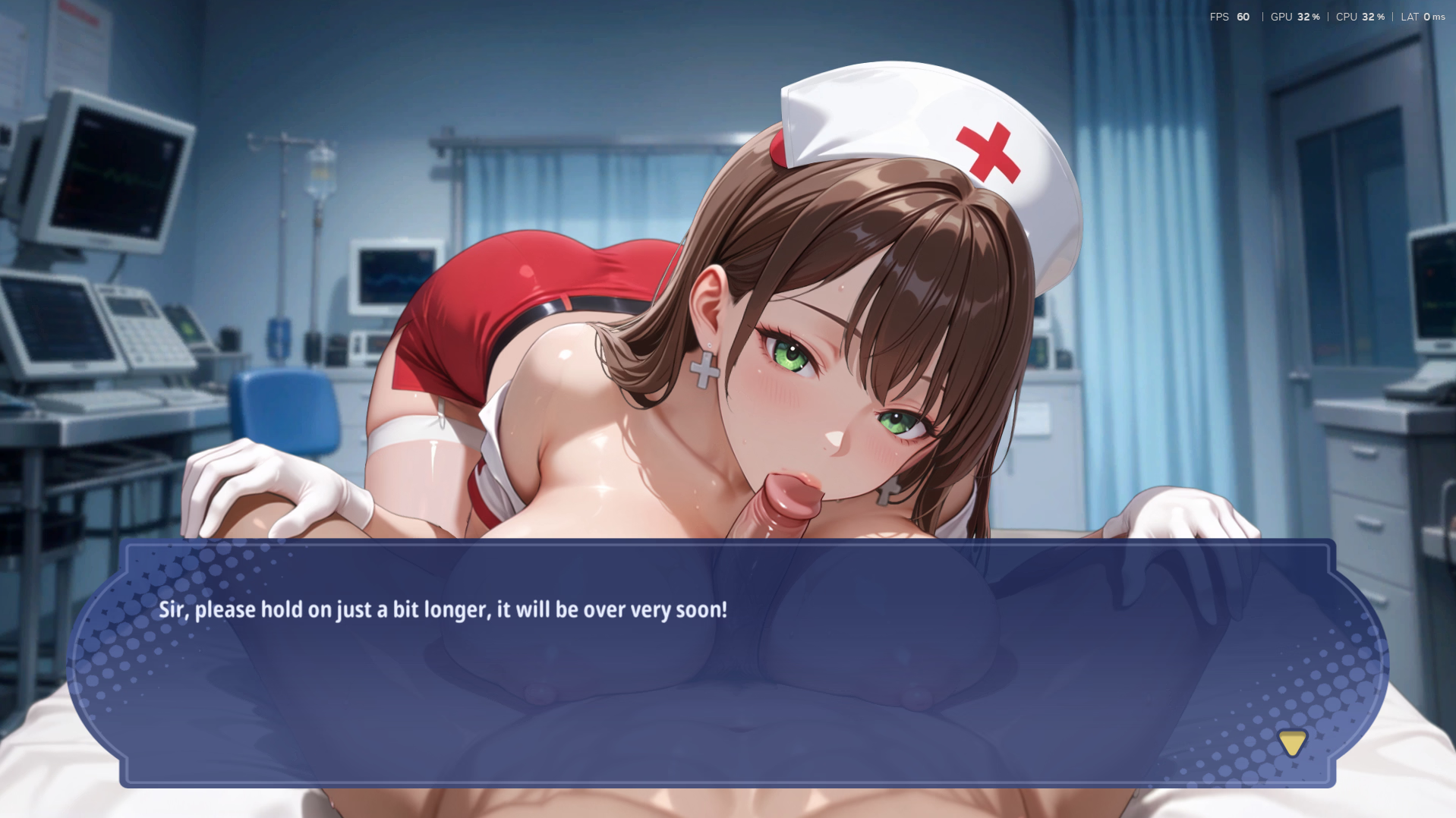
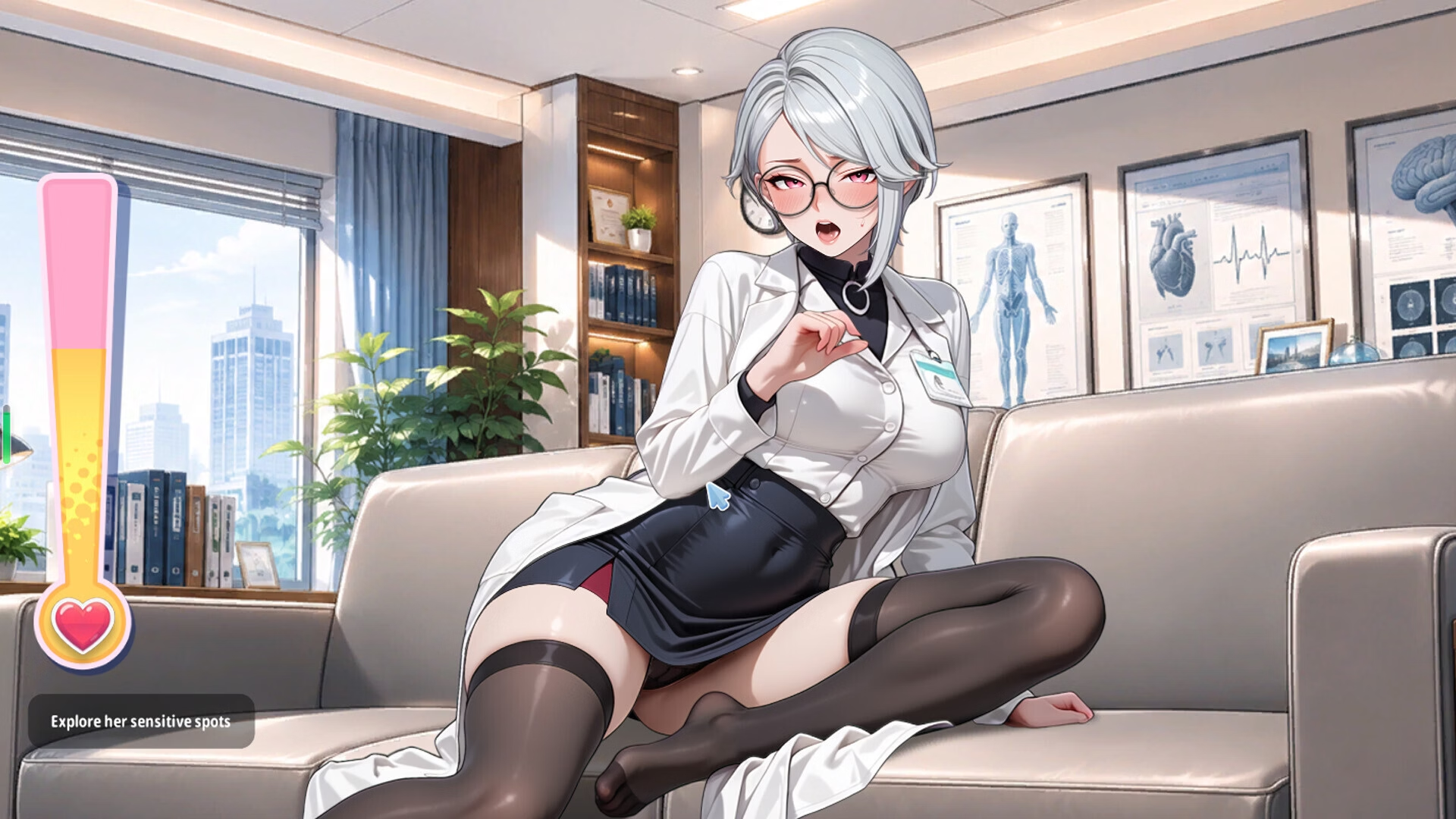
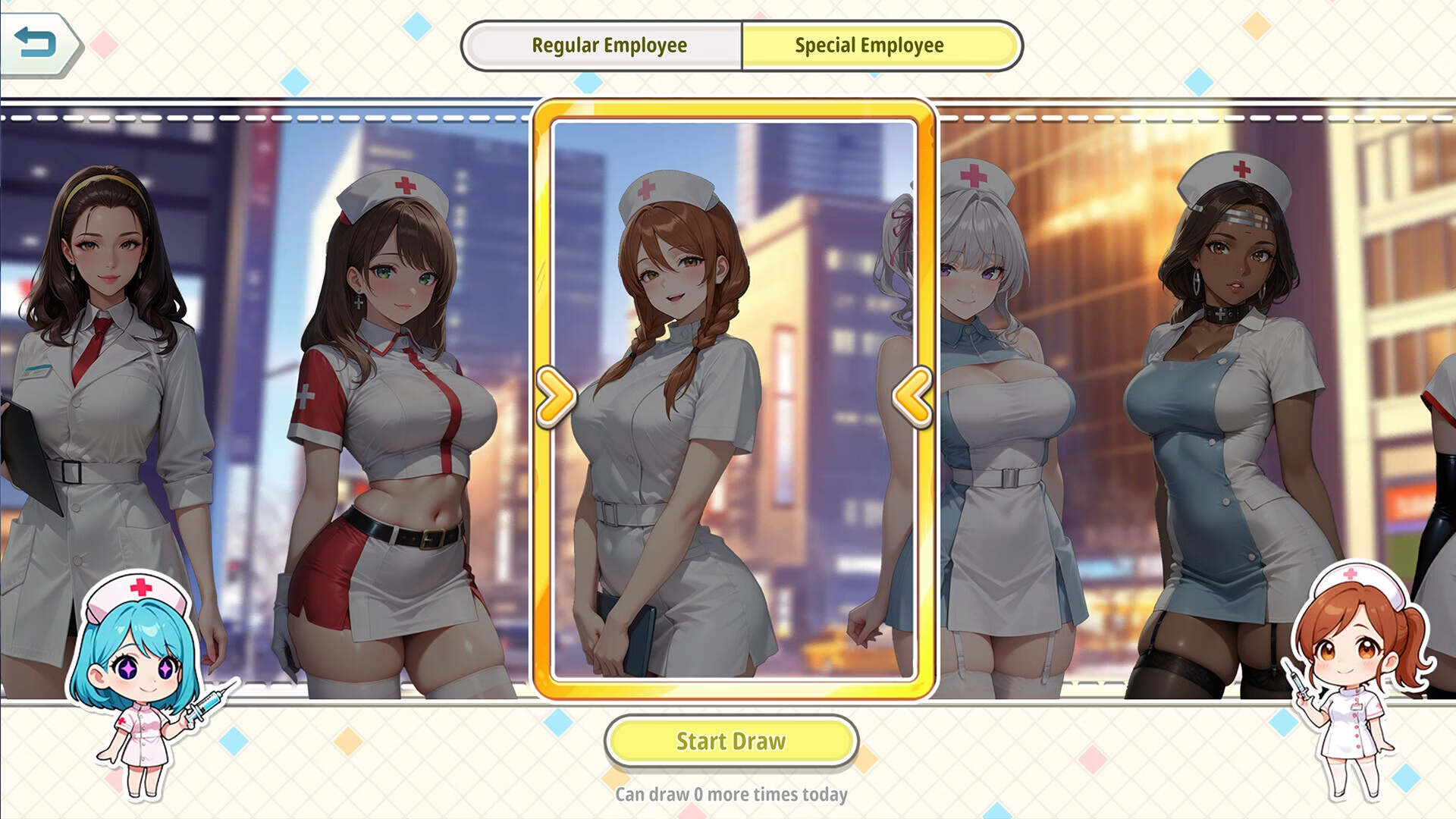
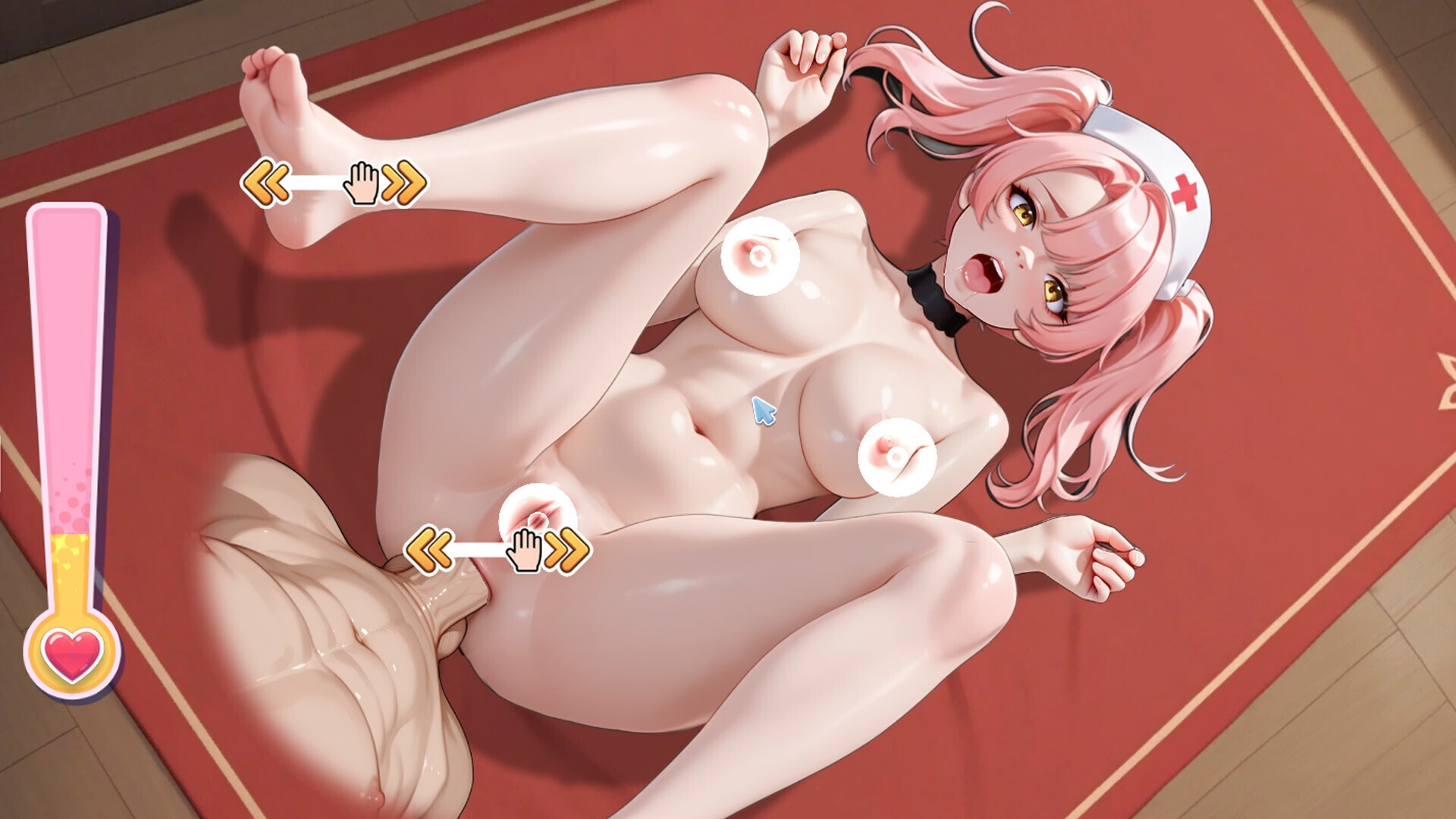
Hospital Rhapsody puts you in the director's chair of a struggling hospital, balancing patient care and time-limited medical emergencies with the far more delicate task of getting nine adult female doctors and nurses to trust you. Daytime belongs to management and flirtation. Nighttime belongs to a mysterious trading market that operates on rules the hospital board would rather you never learn. Cartoon-style art keeps the tone playful while the stories underneath sharpen into something far less professional.
2. Expanding the hospital is not a neutral act. New departments unlock new staff, and new staff unlock new private conversations in rooms that did not exist an hour earlier. The game treats infrastructure as a delivery system for intimacy. A renovated break room becomes a place where a nurse lingers after her shift. A newly opened wing creates a corridor where a doctor catches you alone. The building grows, and so does your access.
3. The clinical tone is deliberate bait. The game presents itself as a hospital simulator long enough for you to settle into spreadsheets and patient flow, then it starts slipping character moments into the gaps between shifts. A doctor asks to speak with you after hours. A nurse mentions a problem she cannot bring to anyone else. The management work never disappears. It just becomes the excuse you use to stay late.
2. The game's promotional material asks what stories might unfold behind the doors of the director's office, and the answer is that they unfold slowly. A nurse who reveals nothing for the first ten hours of play might hand you a secret in hour eleven that reframes every conversation you have had with her. The pacing is uneven by design. Some women crack early. Some stay closed until the hospital is half-built. The ones who take longest are usually the ones with the most to lose if you talk.
3. The intimacy is not a reward for good management. It is a consequence of proximity and attention. You do not unlock a scene by hitting a patient quota. You unlock it by being in the right room at the right hour and saying the thing she did not expect you to say. The game rewards presence over efficiency. A director who spends his evenings reviewing charts will build a functioning hospital and learn nothing about the women who run it. A director who lingers in the break room will learn everything, and most of it will complicate his morning.
2. The market's rules are not the hospital's rules. A trade that would be unthinkable in the director's office becomes ordinary in the dark. The women on your staff appear in the market's transactions in ways that recontextualize every conversation you have had with them during daylight hours. A doctor who refused to discuss a patient's file might be the same person who is willing to discuss something far more personal if the price is right. The game does not force you to make those trades. It simply makes sure you know they are available.
3. The night market is where the game's adult content sharpens. The daytime flirtation is suggestive. The market is explicit. Transactions in the dark carry a charge that the hospital corridors cannot match, and the game leans into the contrast between the sterile white of the day and the low light of the screen after hours. Every night you spend in the market is a night you are not resting, and the morning shift does not care how tired you are. The hospital opens at the same time regardless.
Hospital Management as a Cover for Something Less Clinical
1. The daytime loop is built on triage and timing. Patients arrive with conditions that punish hesitation. Time-limited medical events force you to decide which emergency gets your attention and which one sits in the waiting room long enough to become a problem. The hospital expands as you clear cases, and every new wing brings another doctor or nurse onto your staff, which means the management layer and the relationship layer feed each other whether you plan for it or not.2. Expanding the hospital is not a neutral act. New departments unlock new staff, and new staff unlock new private conversations in rooms that did not exist an hour earlier. The game treats infrastructure as a delivery system for intimacy. A renovated break room becomes a place where a nurse lingers after her shift. A newly opened wing creates a corridor where a doctor catches you alone. The building grows, and so does your access.
3. The clinical tone is deliberate bait. The game presents itself as a hospital simulator long enough for you to settle into spreadsheets and patient flow, then it starts slipping character moments into the gaps between shifts. A doctor asks to speak with you after hours. A nurse mentions a problem she cannot bring to anyone else. The management work never disappears. It just becomes the excuse you use to stay late.
The Nine Women and the Side They Only Show You
1. Nine is not a roster. It is a series of locked doors. Each doctor and nurse carries a distinct personality and a specific set of conditions that determine how she opens up. The stern surgeon who tolerates no mistakes during surgery is not the same woman who sits across from you in the break room at midnight, and the game makes you earn the gap between those two versions. Trust is not a bar you fill. It is a sequence of choices that either prove you can be trusted with what she is hiding or confirm that you cannot.2. The game's promotional material asks what stories might unfold behind the doors of the director's office, and the answer is that they unfold slowly. A nurse who reveals nothing for the first ten hours of play might hand you a secret in hour eleven that reframes every conversation you have had with her. The pacing is uneven by design. Some women crack early. Some stay closed until the hospital is half-built. The ones who take longest are usually the ones with the most to lose if you talk.
3. The intimacy is not a reward for good management. It is a consequence of proximity and attention. You do not unlock a scene by hitting a patient quota. You unlock it by being in the right room at the right hour and saying the thing she did not expect you to say. The game rewards presence over efficiency. A director who spends his evenings reviewing charts will build a functioning hospital and learn nothing about the women who run it. A director who lingers in the break room will learn everything, and most of it will complicate his morning.
The Night Market and the Currency You Do Not Want to Name
1. The night market is the game's second economy. During the day, you manage budgets and staff rotations. At night, you open your computer and enter a trading space that operates outside the hospital's official channels. The market does not sell medical supplies. It sells the things the day shift pretends do not exist: information, access, favors that come with strings thick enough to hang a career on. The game does not explain who runs it. It only asks what you are willing to bring to the table.2. The market's rules are not the hospital's rules. A trade that would be unthinkable in the director's office becomes ordinary in the dark. The women on your staff appear in the market's transactions in ways that recontextualize every conversation you have had with them during daylight hours. A doctor who refused to discuss a patient's file might be the same person who is willing to discuss something far more personal if the price is right. The game does not force you to make those trades. It simply makes sure you know they are available.
3. The night market is where the game's adult content sharpens. The daytime flirtation is suggestive. The market is explicit. Transactions in the dark carry a charge that the hospital corridors cannot match, and the game leans into the contrast between the sterile white of the day and the low light of the screen after hours. Every night you spend in the market is a night you are not resting, and the morning shift does not care how tired you are. The hospital opens at the same time regardless.
New Download







RELATED GAMES


Syahata's Bad Day Game Download Free latest version
1.0.5

The Cradle Of Nurtured Eggs game download free
0.1.35a

The Secret Atelier game free download
2.3 Steam

Super Naughty Maid Game Download Free
Final

Super Naughty Maid 2 Game Download Free latest version
1.2

Kobeni Sloppy Blowjob Devil game download latest version
1.4 Paid

A Night With Mitsuki Bakugou latest version download free
1.0

Trick or (Sex)Treat : Halloween Special Game Download Free latest version
1.0

Velvet Ledger Game Download Free latest version
0.1